The Earth writes in clouds, coastlines and rock. Here's how to read it.
Looking up
Sky Reading
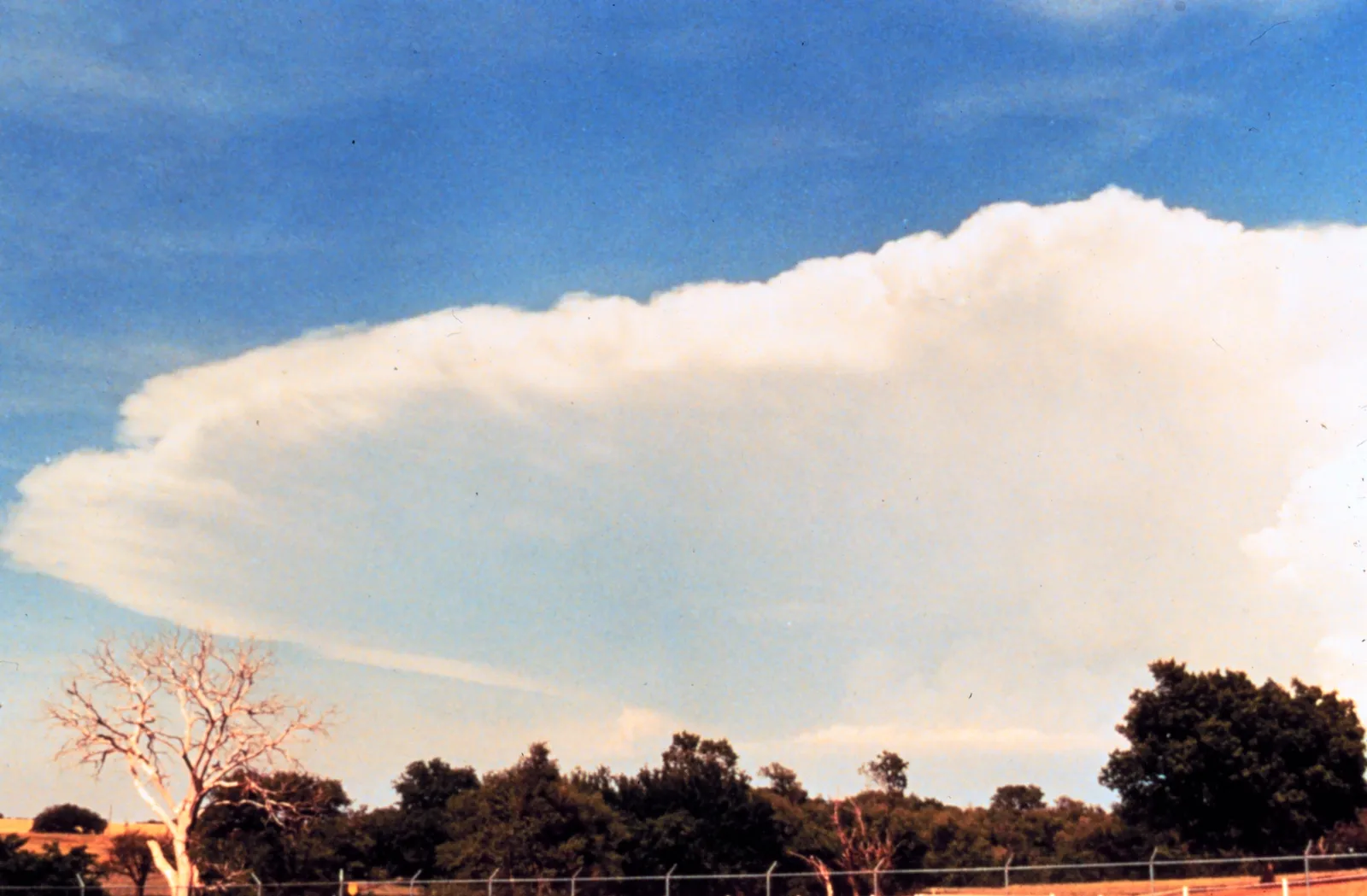
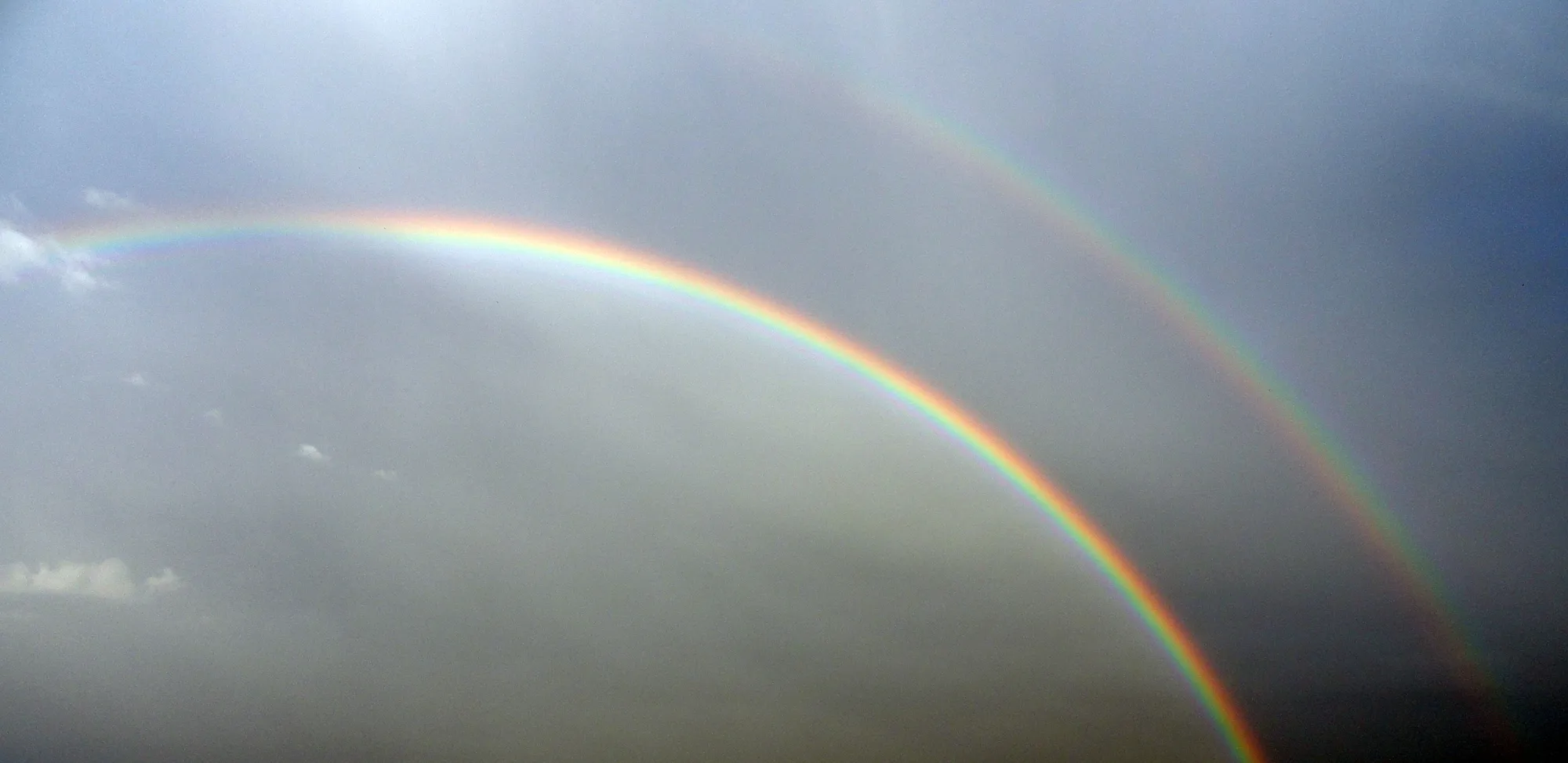
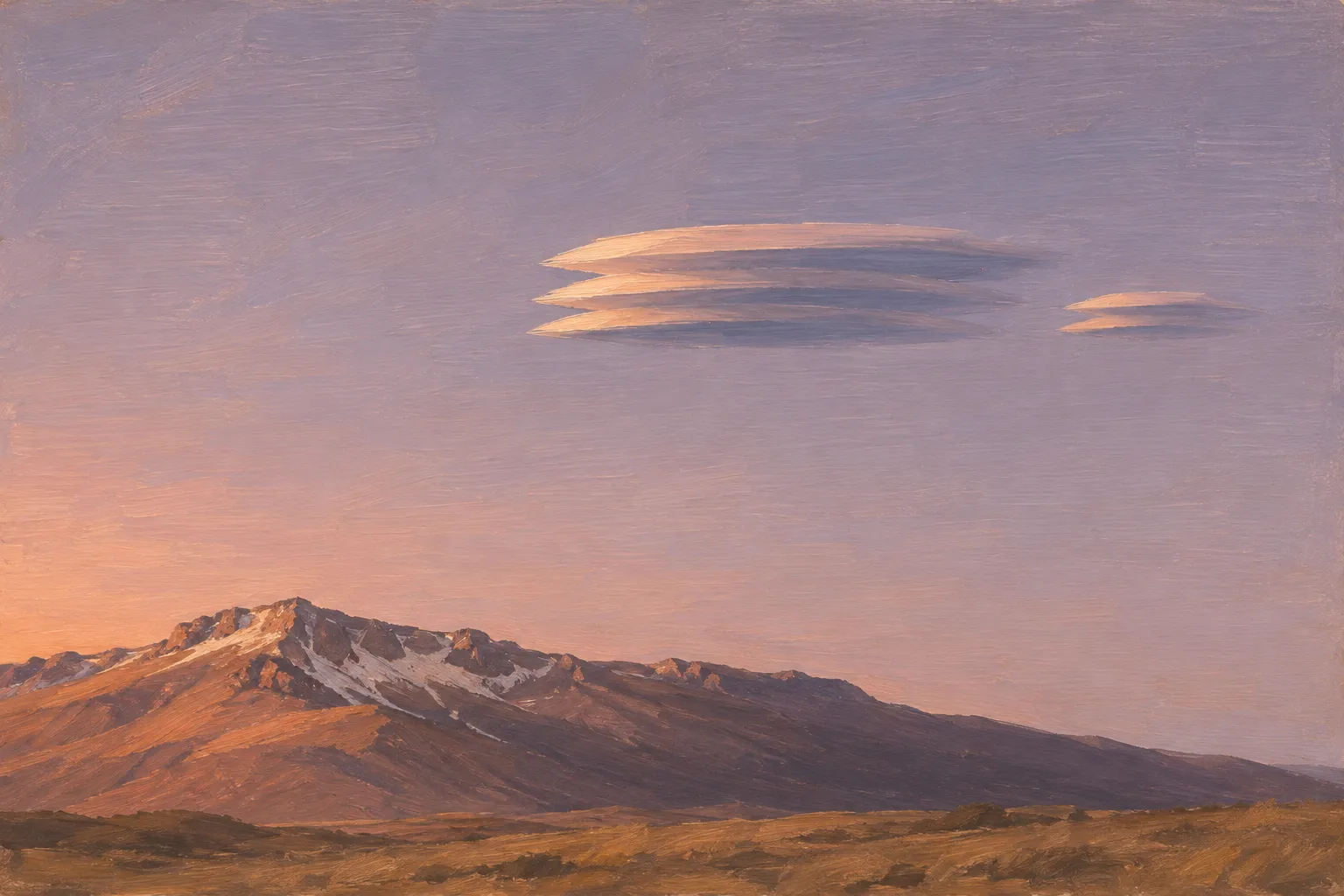
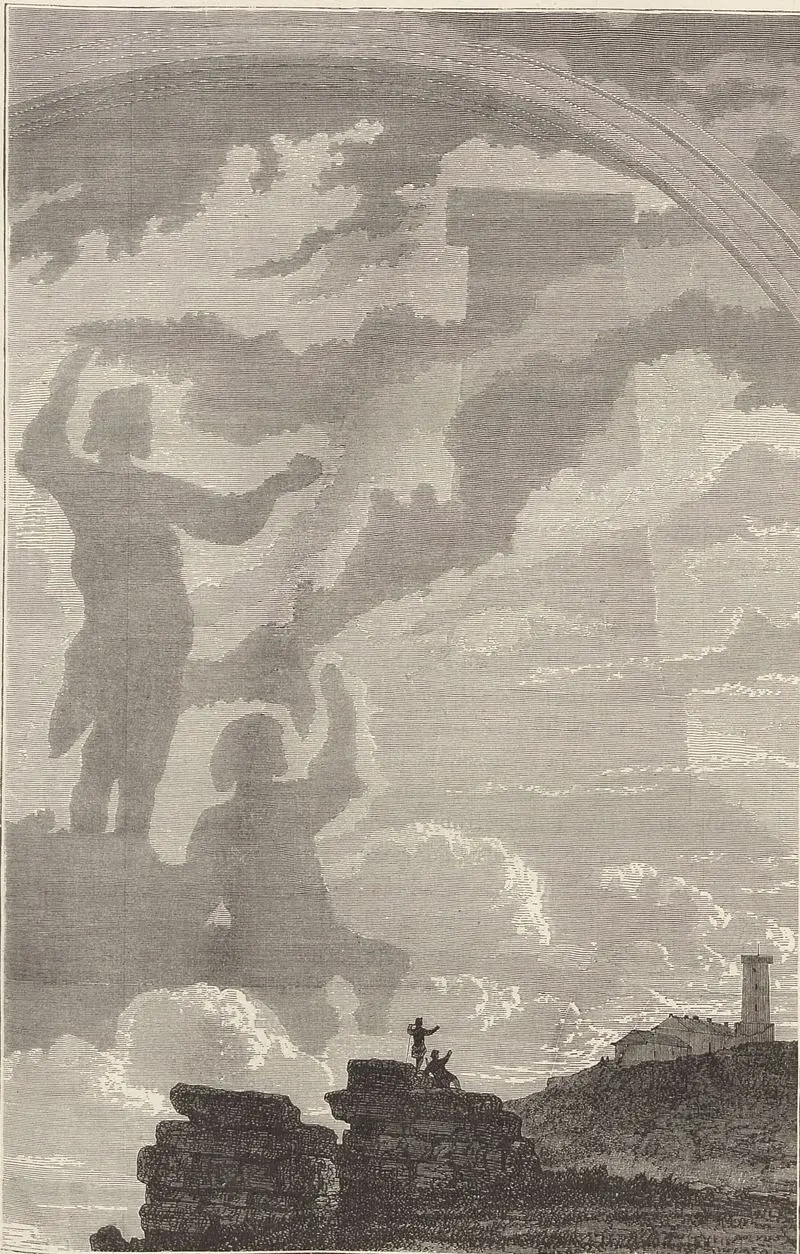
Cloud genera, water-drop optics such as double rainbows and the Brocken spectre, and mountain-wave clouds, read from the ground with rough hand-span angles and recomputed geometry; no weather forecasts, storm chasing or advice on what to do when a cloud appears.
Ten types of clouds, cirrus to cumulonimbus, in high, middle and low levels. In the NWS table the high level starts near 3 km at the poles, 6 km in the tropics.
Image credit
"Cumulonimbus anvil, NOAA Photo Library image nssl0035" by NOAA Photo Library, NOAA Central Library; OAR/ERL/National Severe Storms Laboratory (NSSL) — https://commons.wikimedia.org/wiki/File:Cumulonimbus_cloud_-_NOAA.jpg — Public domain (US: U.S. Government work, made by a NOAA employee as part of official duties (17 U.S.C. §105))
"Double-Rainbow.jpg" by LeonardoWeiss — https://commons.wikimedia.org/wiki/File:Double-Rainbow.jpg — CC BY 3.0 (https://creativecommons.org/licenses/by/3.0/)
Illustration: Meridian & Moraine. Generated illustration — not a photograph, satellite image or map; not to scale. Reuse: CC BY 4.0 (https://creativecommons.org/licenses/by/4.0/) to the extent any rights apply.
"Le Spectre du Brocken, fig. 84, from L'atmosphère: météorologie populaire" by Unknown author — https://commons.wikimedia.org/wiki/File:Flammarion_Le_Spectre_du_Brocken_.jpg — Public domain (US: first published 1888, before 1931; EU: anonymous engraving first published 1888, more than 70 years ago (engraver not named)); modified: resized
Count this visit?
Yes lets Google Analytics set a cookie that counts visits. Cloudflare Web Analytics, which uses no cookie, runs either way; there are no ads. Footprint of a visit